
Roof Washing in Asheville NC
Roof Washes Starting at 450
Safe, low pressure soft wash roof cleaning that removes the black streaks that eat your shingles, algae, and moss from your roof without damaging them.
Roof cleaning services in Asheville start with one core concept. Your shingles should be cleaned, not blasted. Those ugly black streaks running down your roof are not dirt and they are not stains from age. They are a living bacteria called Gloeocapsa Magma. JD Power Washing of Asheville uses a soft wash technique so your roof gets clean and your shingles stay protected.
JD Power Washing of Asheville is owner/operated by James who is a 27 year resident of Asheville and native North Carolinean, from Raleigh. The wet rain forest like climate, heavy tree cover, and warmer seasons make WNC roofs a perfect home for algae, moss, and lichen.
This page explains what is growing on your roof, why soft washing is the correct and safest method, what pressure washing can do to your shingles, and what to expect from a professional roof cleaning.
What Are Those Black Streaks
The dark streaks you see on your roof are caused by a blue-green bacteria called Gloeocapsa magma. It travels through the air as spores, lands on your roof, and takes hold. Once it settles it spreads across the shingles and slowly darkens the surface.
This growth is not only cosmetic. It feeds on the limestone filler and organic material in asphalt shingles and holds moisture against the surface. Where the algae thrives, moss and lichen often follow, and those hold even more water. Left in place that constant moisture works against the roof and can lead to unfavorable, costly conditions.
This growth is removable. A proper cleaning washes off the visible black streaks and removes the algae at the root so your roof looks dramatically better and stays cleaner for longer. Cleaning a roof that looks bad can help you avoid replacing a roof that is intact.
Why Soft Wash Roofs
A roof should never be cleaned with high pressure. Asphalt shingles are protected by a layer of small mineral granules and those granules are what shield them from the weather. High pressure can strip away granules and age a roof. Accelerated roof wear and tear means quicker replacement.
Soft washing takes the opposite approach. It uses a Sodium Hypocholorite application that does the cleaning. The chemical is applied and allowed to sit so it can kill the algae, moss, and lichen. It is then rinsed off or left in place depending on the severity of the staining. The granules remain attached in place and the growth is killed at the source.
The Asphalt Roofing Manufacturers Association (ARMA) recommends against pressure washing shingles and suggests this soft wash chemical cleaning as the best method. Soft washing is the approach the people who make shingles endorse so it is the method James uses.
James Cleans Asphalt Shingle, Metal, Tile
Most homes have asphalt shingle roofs and are the most common candidates for cleaning because they are so prone to Gloeocapsa magma and moss.
Metal and tile roofs benefit from soft washing as well. They collect algae, mildew, and the grime that pollen season leaves behind. Whatever the material, the principle is the same. James matches the technique to the surface, let the treatment do the work, and rinse it off. He also protect the areas around your home during the process, taking care to wet down and rinse landscaping so your plants are looked after while James cleans.
How Often Should You Clean Your Roof
There is no single number that fits every home, because it depends heavily on your specific conditions. In our climate a good rhythm is every two to four years.
Pro Tips
Look at your north-facing and shaded slopes first. Black streaks and moss almost always start there because those areas stay damp the longest.
Do not let a streaked roof convince you it needs replacing. A roof that only looks bad from algae can often be cleaned which is cheaper than a new roof.
Never pressure wash shingles. The mineral granules that protect the shingle can be blasted loose. This can age the roof and add risk to your warranty.
If your home sits under hardwoods then clean more often. Leaf litter and shade feed algae and moss.
Time your cleaning for spring or fall. Clearing spores before the warm season, and again before winter, keeps growth from getting a foothold.
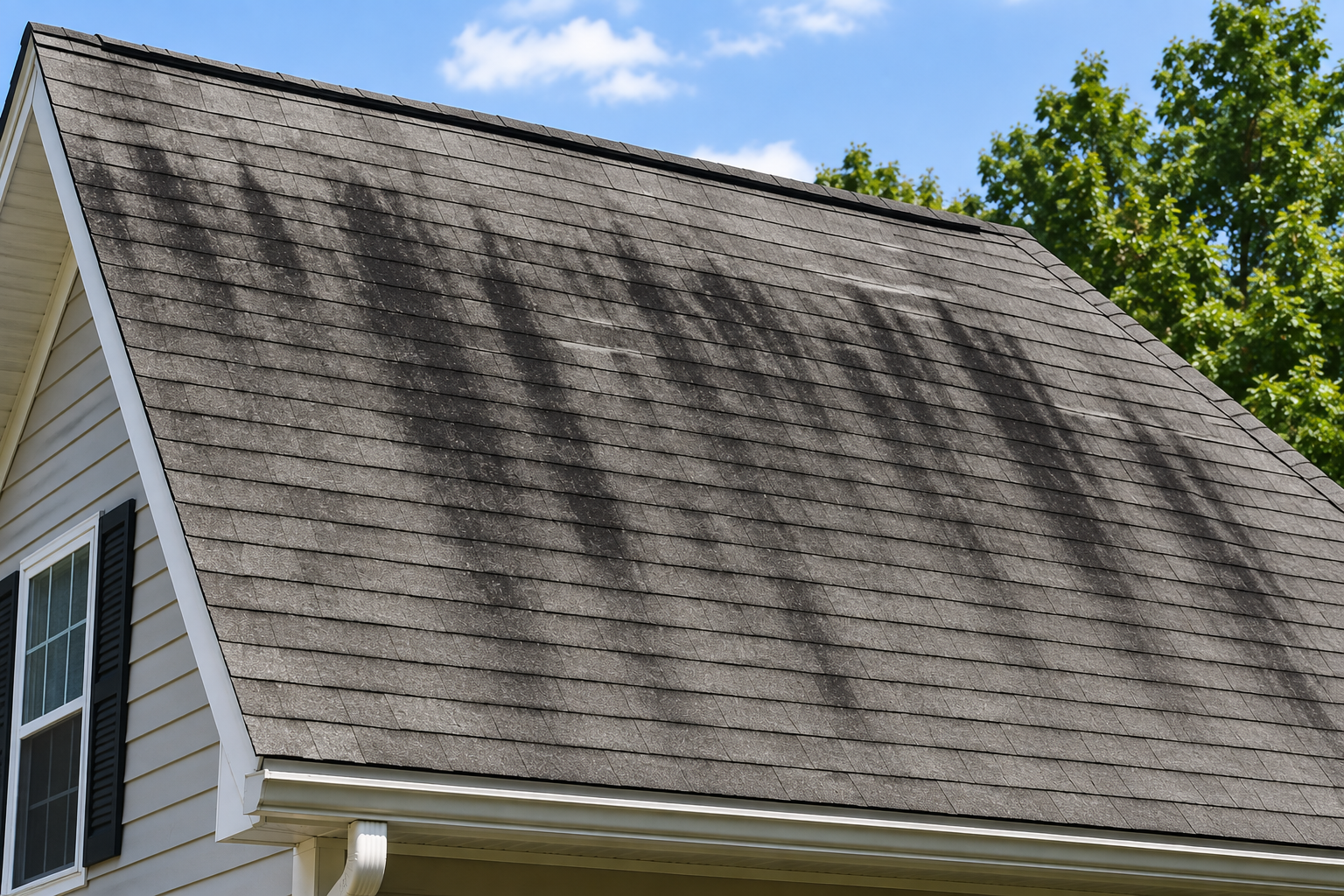
Shown above is the black Gloeocapsa Magma that grows abundantly on WNC shingle roofs.
What James Cleans
Black algae streaks (Gloeocapsa magma)
Moss growth on shingles and in valleys
Lichen and fungus on the roof surface
Asphalt shingle roofs
Metal roofs and standing-seam panels
Tile roofs
North-facing and shaded slopes
Roof-line grime and pollen buildup
Mildew and organic staining
Debris-holding damp areas prone to regrowth
Process
Step 1
Roof Inspection & Estimate
James looks at your roof material, pitch, and the amount and location of growth, then sends you a quote.
Step 2
Protect Property
James pre-wets landscaping and take care around gutters, downspouts, and delicate areas so your plants are looked after.
Step 3
Chemical Application
James applies the cleaning solution across the affected slopes using soft wash equipment.
Step 4
Let it Sit
The SH is left to dwell so it kills the algae, moss, and lichen at the source.
Step 5
Rinse
James rinses thoroughly. Killed growth washes away, and any remaining residue continues to clear over the next few rains.
Step 6
Walk Around
James inspects the roof to make sure he didn’t miss any areas.
Key Points
The black areas on roofs are Gloeocapsa magma, not stains, and they are removable with the right method.
James soft washes roofs. Never pressure washes. High pressure strips the protective granules off asphalt shingles.
Soft washing is the low pressure, chemical (Sodium Hypocholorite) based method that shingle makers recommend.
Cleaning a roof regularly can prevent early replacement, which is far more expensive.
Insurance companies are beginning to require roof washing to maintain your policy protections.
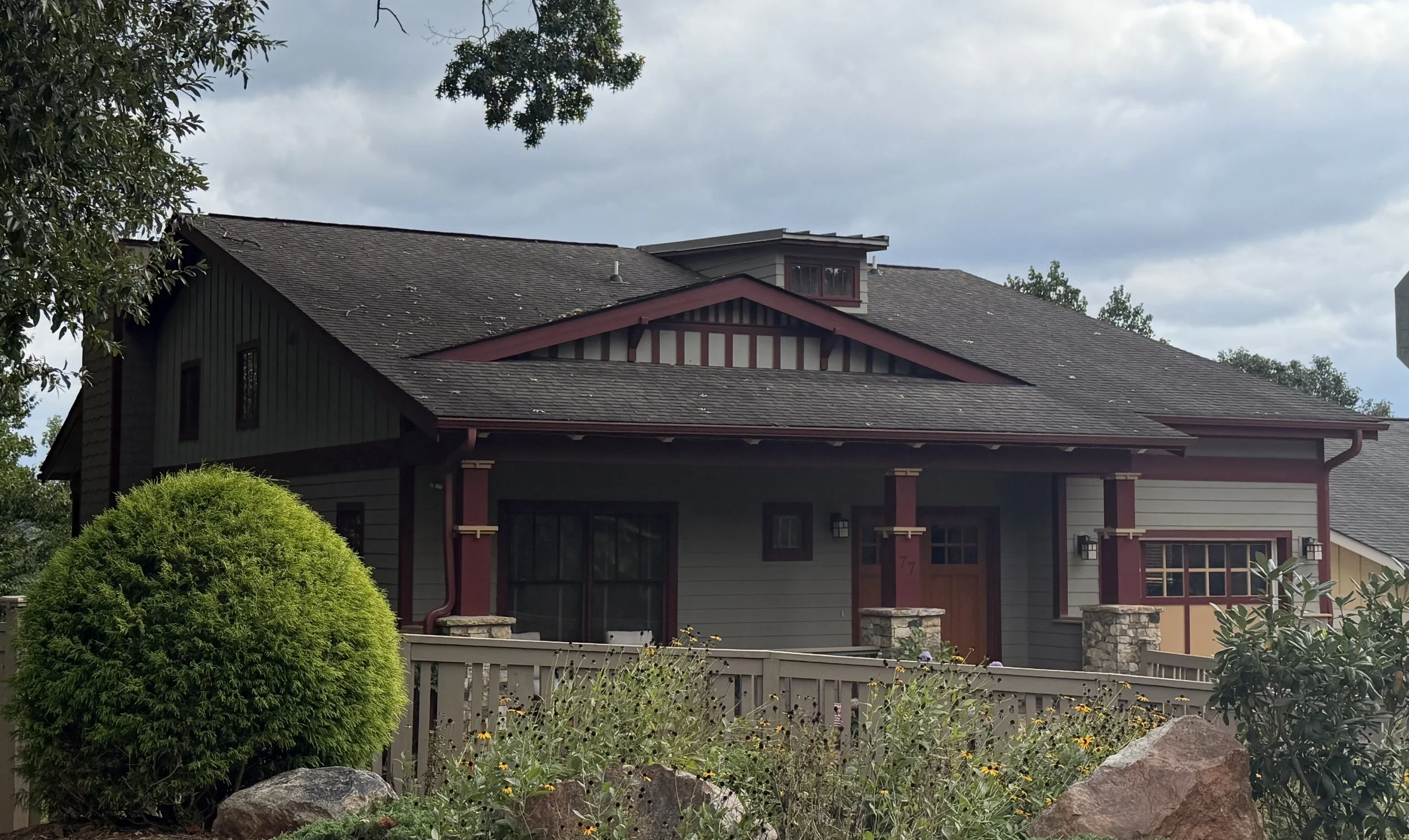
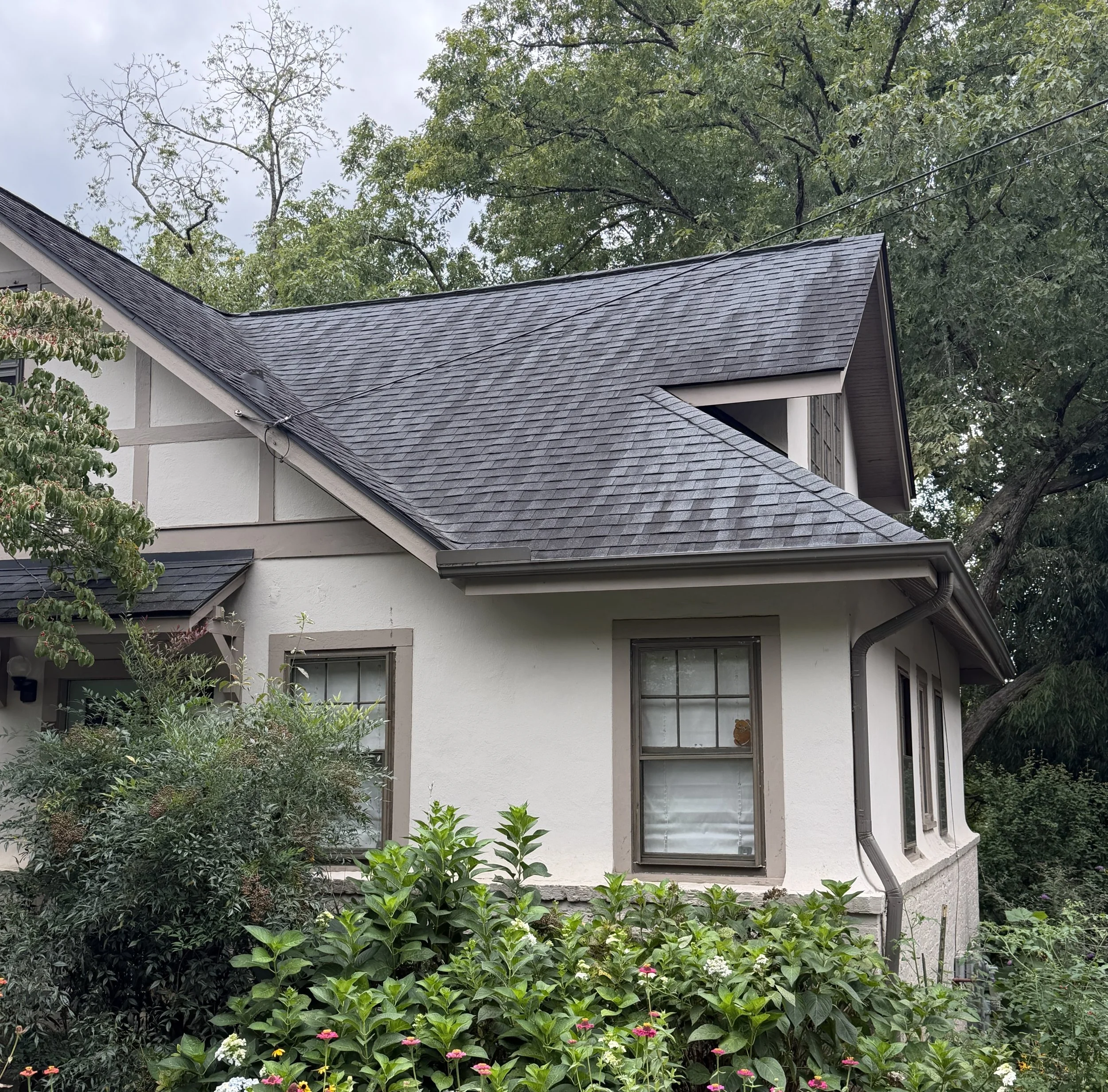
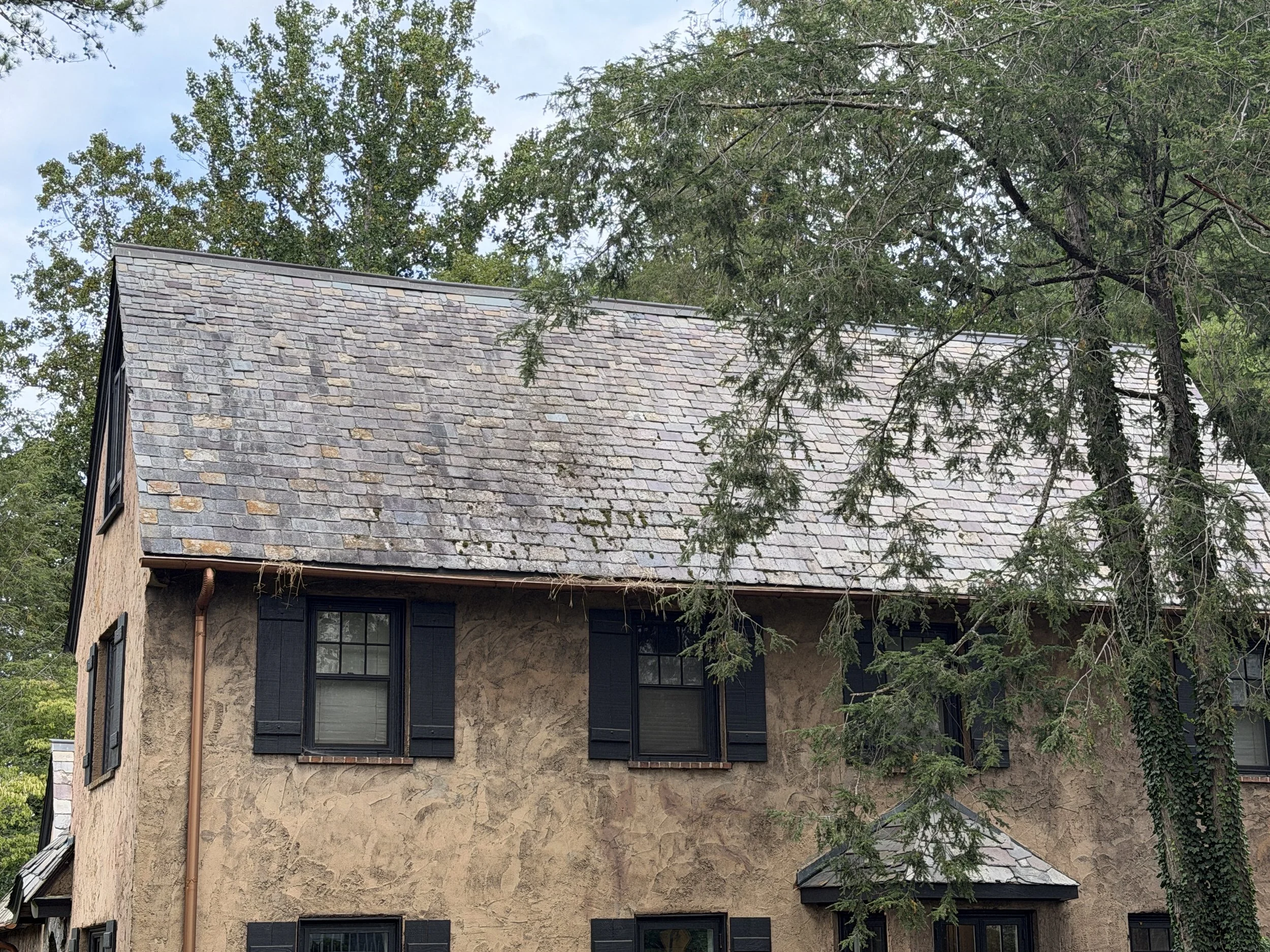
All of these roofs are suffering from beginning to middle stage Gloeocapsa Magma growth. If you roof has this it is time to have it cleaned. Insurance companies are beginning to void coverage if roofs are not cleaned regularly. Check with your company.
What Affects Your Price
Roof Cleaning starts at $450. Here's what shapes the final number:
Square footage to be treated.
Roof pitch and complexity.
Roofing material.
How much growth is present.
Accessibility.