
Deck Cleaning in Asheville
Cleaning + Brightener (2-step) starting at $150 when Bundled and $250 as Standalone
James step by step washing a wood deck with the correct solutions and pressure.
Wood decks require a different approach from concrete. Too much pressure can damage the wood fibers, create raised grain, and leave the surface looking worse than when the cleaning started.
James provides medium pressure deck cleaning and wood brightening that lifts gray weathering, mold, and grime without gouging your boards, and leave the wood ready for staining or painting.
Medium Pressure + Brightener
Deck cleaning services in Asheville are about more than blasting off dirt. A deck is typically soft or hard wood, or, composite that is exposed to the Spring pollen season, high humidity, and tree shade. If too much pressure is applied or the wood brightener is not done you can gouge the boards, create a fuzzy grain, or leave the surface too damaged for staining or walking barefoot on. However, when done correctly, the same deck comes back bright, even-toned, and ready to protect and enjoy.
James, owner/operator of JD Power Washing of Asheville, cleans decks the way the wood should be cleaned. That means medium pressure to remove the grime and the gray weathered layer followed by a wood brightener to reset the pH and pull the natural color out. James is certified and insured and serves all areas within a 20 mile radius (give or take) of downtown Asheville.
This page walks through what actually happens to a deck outdoors, why the method matters, what can go wrong with a careless approach, and pricing factors. Deck cleaning starts at $250 and on-site estimates are free.
Why Decks Turn Gray, Green, and Grimy
Wood is organic, and outdoors it is under constant attack. Ultraviolet light breaks down the natural glue that holds wood fibers together and gives the surface its color. As lignin degrades the top layer of the wood turns a dull gray. It is not just dirt sitting on top. It is a thin layer of damaged, loosened wood fibers, and ordinary washing doesn’t remove it.
On top of that, Asheville’s humid summers keep horizontal boards damp long after a rain which feeds organic growth. This is what turns a deck green and black, especially on sections where the sun never reaches. Additionally, pollen settles into the grain and becomes a food source.
Composite and PVC decks are not immune. Homeowners buy composite expecting it to be maintenance free but the surface still collects pollen, organic film, and mold. The growth does not eat the board the way it does with wood, but it discolors it, makes it slippery, and unattractive. Both wood and composite need the right cleaner, the right pressure, and patience to do it without damage.
Grime Removal + Brightener: The Ideal Approach
The most important thing to know is that decks are not like driveways. Concrete can take high pressure. Soft wood cannot. High pressure on a wood deck will carve lines into the boards, tear out the grain, and leave a splintery fuzz that ruins the look and won’t hold stain evenly. That damage is permanent and cannot be sanded back to smooth.
James’ method uses the right pressure with the right cleaning solutions. He applies a dilution of Sodium Metasilicate that breaks down mold, algae, pollen film, and the gray weathered layer. That sits for ten to twenty minutes so that the product has time to loosen the grime. Then James uses medium pressure at a controlled distance for a complete removal of the nasty.
The final step is what separates a real deck cleaning from a rushed rinse: the brightener. Sodium Metasilicate is alkaline based and after cleaning it can leave the wood at too high a pH. A brightener called Oxalic Acid is a diluted solution that neutralizes that pH and brings it back into balance. It also opens the wood pores and restores the natural warm tone of the wood. The difference is dramatic. It is recommended to hire a professional like James of JD Power Washing of Asheville who understands the correct dilution ratios and how to apply these chemical properly. Overall these products are safe but in the wrong hands nothing is really safe.
How Often Should You Have Your Deck Cleaned
For most decks a professional cleaning twice a year keeps the wood healthy and looking good. Once after pollen season and once again just before winter. Fall is a particularly good time since you may have guests coming for the holidays.
What Happens with the Wrong Approach
The most common damage is furring and gouging from high pressure. A homeowner or an inexperienced crew rents a machine, holds the tip too close, and leaves the boards raised and rough. James does not do that.
Skipping the brightener is the quieter mistake. The deck gets cleaned, it looks fine when wet, and then it dries to a dull, slightly gray, uneven tone because the pH was never neutralized.
The other issue is using the wrong chemicals. We use eco-conscious solutions and we pre-wet and rinse surrounding landscaping to protect it. Careful chemistry and careful pressure are how you do the job right.
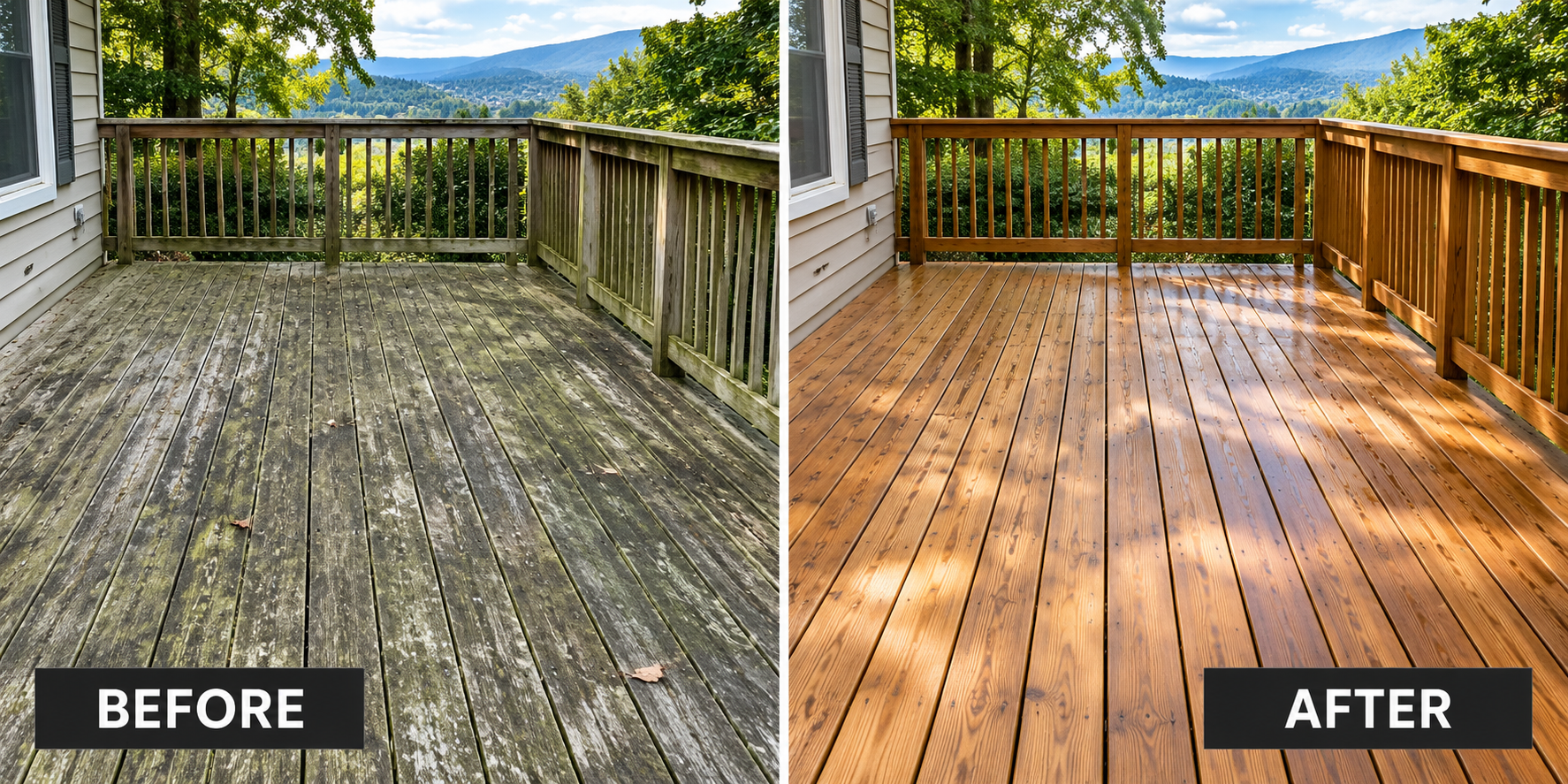
Those of you living in Western NC know that a deck can easily become infested with organic growth as shown on the left. I have seen so many decks like this. Don’t let your deck go for this long. Bi-annual cleaning is best.
Key Points
Decks need medium pressure, not high pressure. The gray on wood is a layer of damaged fibers. Blasting it off can leave permanent damage that will not hold stain.
The correct method is 1. a cleaner to remove mold and weathering wood and 2. a brightener to neutralize the pH and restore the natural color. Skipping the brightener leaves wood dull and uneven.
Composite decks are soft washed, not blasted. High pressure and harsh chemistry can mar the surface or void the warranty.
Cleaning is required preparation before staining or sealing. The wood needs to dry 24 to 48 hours so the finish bonds.
What James Cleans
Pressure-treated pine decks
Cedar and softwood decks
Tropical hardwood decks
Composite decks
PVC and capped composite decking
Deck railings, spindles, and balusters
Deck stairs and step treads
Built-in deck benches and planters
Pergolas and deck-attached structures
Deck boards prepped for stain or seal
Tips
Never use a high-pressure on a wood deck.
Always do the brightener. A brightener resets the pH and pulls the natural color back.
If you plan to stain, always clean and brighten first, then let the wood dry a full 24 to 48 hours.
Check your composite decking warranty before anyone pressure washes it. Some composite manufacturers warn that improper washing can void coverage.
Time your cleaning around the seasons. A wash after spring pollen and again in fall keeps the wood from turning green and slippery.
Do not stain over a weathered or a dirty deck. Trapped grime cause the new stain to peel.
Pricing
What your deck cost depends on the square footage, the material, how heavily weathered or mold covered it is, and the complexity of the structure. A single level deck cleans faster than a multi level deck with lots of railings, spindles, stairs, and benches.
Whether the job includes wood brightening also affects the price since that is a separate chemical solution and an additional step. Wood brightening is always optional. Composite decks are usually just clean and rinse while a badly grayed wood deck that needs full clean and brightening takes more product and more time. A ground level deck is quicker than a second story deck that requires more setup.
James gives free estimates and he prefers to come look at your deck versus an online guess.
The Process
Step 1
Free Estimate and Deck Assessment
James looks at your deck, identify the material, check the condition, and give you a free estimate.
Step 2
Protect Surroundings
Pre-wet nearby plants, grass, and landscaping.
Step 3
Apply Cleaning Agent
James applies the deck cleaner to break down the organics then lets it soak in.
Step 4
Medium Pressure Rinse
James rinses, working with the grain, to lift away the grime.
Step 5
Wood Brightener if Needed
On wood decks James applies a brightener to balance the pH.
Step 6
Final Walkthrough
James checks the deck, rails and stairs to make sure it is evenly cleaned. You inspect and approve that it is a job well done.