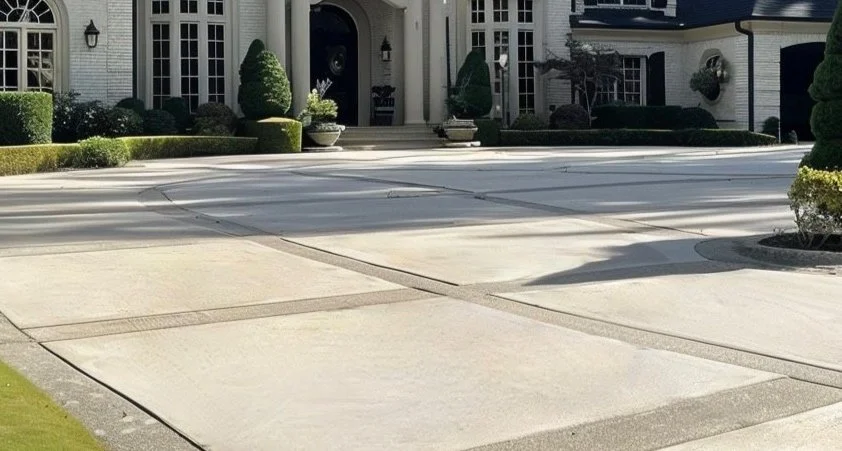
Driveway Cleaning in Asheville
Driveway Washes Starting at $150 when Bundled and $250 as Standalone
James talks you through a step by step concrete cleaning.
Even stripe free concrete cleaning that lifts black mold, moss, and algae from your concrete.
Driveway cleaning is more than rinse off dirt and dust. Concrete sustains red clay staining, spring pollen, humidity, black algae, and the oil marks that come with everyday parking. JD Power Washing of Asheville cleans driveways the right way using the correct pressure, the correct surface tool, and the correct cleaners for each stain so you get an even finish.
JDPW is owner/operated, certified and insured, and based in Asheville. James, the owner, runs every job personally, so he is the one quoting your job, and, the person cleaning it.
Below James will talk about how driveway concrete actually gets dirty, why the wrong method can permanently damage it, what James’ pressure washing process looks like, how often you should clean, and the factors that affect price.
FAQs
Why Driveways Get Dirty?
Concrete is porous. The surface is full of tiny pores that soak up liquids like a sponge. Driveways get rinsed during rainstorms but still turn gray, green, and black over time. The grime has worked its way inside.
On top of the natural staining, everyday use leaves its mark. Oil and transmission drips from cars, black tire scuffs, rust, grills or gutter downspouts, and organic buildup along the edges where leaves collect. Each of these needs a slightly different approach, which is why professional driveway cleaning exists.
Driveway concrete is one of the few exterior surfaces that calls for pressure washing. Solid, sufficiently cured concrete can take the mechanical energy needed to lift ground in dirt, and, the flat surface is perfect for it.
But pressure is only part of the job. Water pushes dirt out of the pores but it does not kills algae roots, break down red clay stains, or cut through oil. That is why concrete cleaning is kind of a hybrid process. James pre-treats the surface with the right cleaner, Sodium Hypocholorite/Degreaser/Iron Rust Remover and lets it soak in. Then he pressure washes it. The chemicals do the loosening so the pressure can remove the stains without damaging the concrete.
Cleaning restores appearance but it does not guarantee that every deep stain will vanish. Oil that has soaked in for years, or rust that has penetrated the concrete, may lighten dramatically but not disappear completely. James will always tell you upfront what to realistically expect for your specific driveway before he starts.
Pressure Washing or Soft Washing for Concrete?
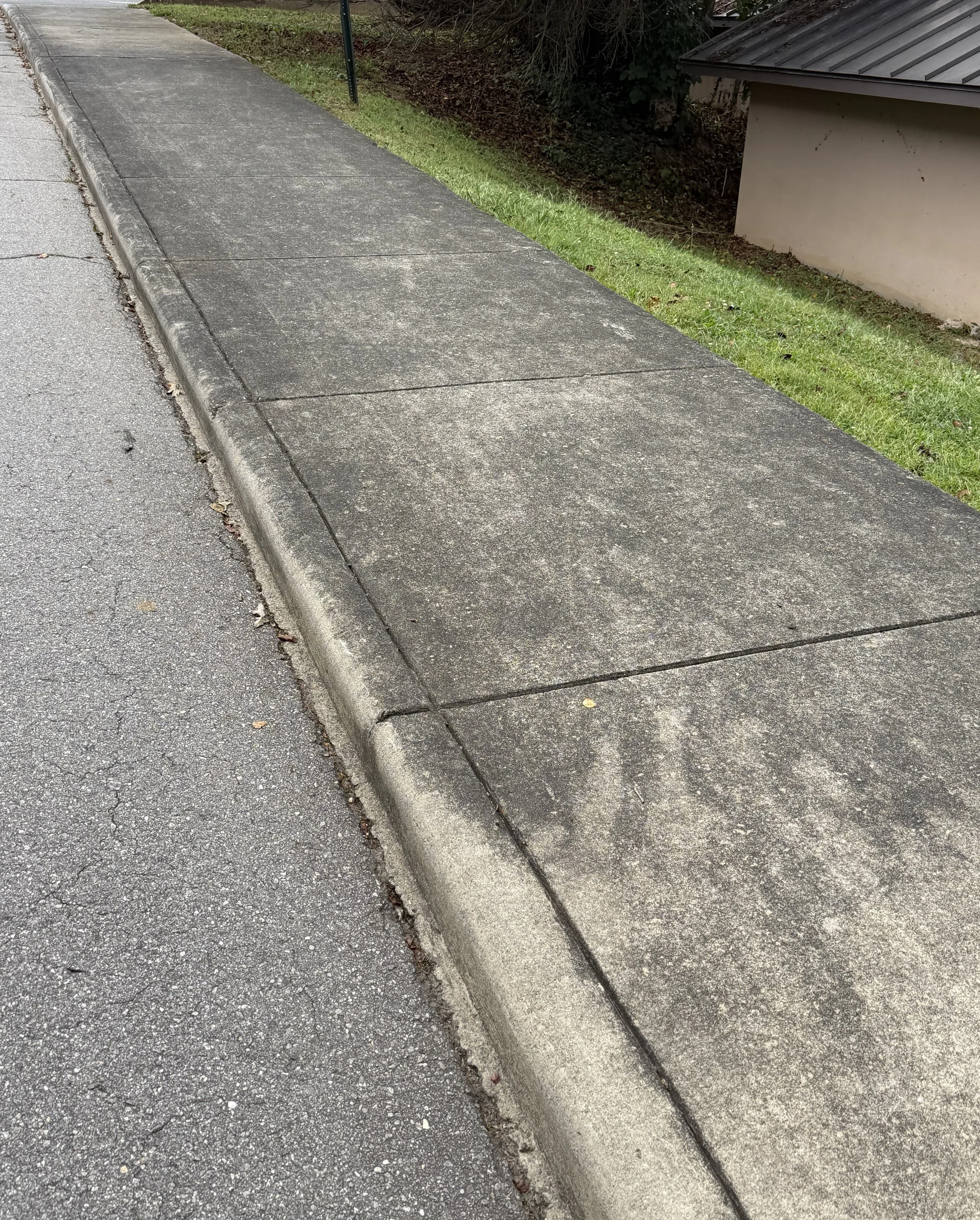
Black mold that has set in on a sidewalk. This is beyond time to clean it. James can easily remove these infestations no matter how bad.
Can Concrete be Damaged?
The most common way homeowners and cut-rate crews ruin a driveway is using a narrow, high pressure tip too close to the surface. Concrete has a thin top layer of cement cream and too much PSI in one spot can blast that layer off. This exposes the rougher aggregate underneath, etching visible marks into the surface, and can cause spalling where the concrete flakes and pits. That damage is permanent and no amount of re-cleaning brings the smooth surface back.
Another mistake is zebra striping or tiger striping. Those uneven light-and-dark bands you see on driveways cleaned the wrong way. They happen because a person waving a wand back and forth inevitably varies their distance and speed so some passes clean more than others. The result looks worse than the original dirt because the difference is so obvious.
This is why James cleans with a rotating surface cleaner rather than a wand. A surface cleaner spins multiple nozzles inside a covered housing that rides at a fixed height spreading the pressure evenly across a wide path. It produces a consistent, stripe-free finish, protects the concrete from point-blast etching, and is far safer.
What to Expect?
The process is simple. Before James arrives he asks that vehicles, portable basketball hoops, planters and anything else be moved off the driveway so he has a clear surface to work.
On site, James starts by identifying the specific staining, then pre-treats the surface with the appropriate cleaners and give them time to soak in. Next he uses the surface cleaner in even, overlapping passes for a consistent finish.
A typical residential driveway is always a same-day job measured in a couple of hours, depending on size and how heavy the staining is. James is careful around garage doors, siding, and plant beds, and we protect the areas that should not take direct pressure. When he is done you get an even, brightened surface that will make you smile.
How Often Should You Clean Your Concrete?
For most homes once a year keeps a driveway looking good and stops grime from settling in. Given the WNC tropical climate a lot of driveways do best on an every-six-months schedule because the humidity, shade and pollen let algae and mold come back faster than in drier regions. You will know when the time is right just keep an eye on it.
Should You Seal the Concrete?
Cleaning and sealing are separate steps. Pressure washing removes what is on and in the surface. A concrete sealer is a protective coating that helps the concrete shed water, oil and stains so they don’t soak in.
James focuses on cleaning it correctly so if you decide to seal it will be ready. James is happy to talk through whether sealing makes sense for your concrete so you can make an informed decision rather than a rushed one.
What James Cleans
Concrete driveways
Red clay and iron-oxide stains
Oil, grease and transmission drips
Rust stains
Black tire marks and scuffs
Algae, mold and mildew streaks
Garage floors and aprons
Curbing and driveway edges
Sidewalks and walkways connected to the drive
Pollen and organic buildup
James using s surface cleaner to clean concrete.
The Process
Step 1
Inspect and Identify Stains
James looks over the concrete and pinpoint exactly what we are dealing with.
Step 2
Pre-treat and Let Sit
James applies eco-conscious, plant-safe solutions and targeted stain treatments, then let them sit to loosen algae, break the clay-iron bond and pull oil out of the pores.
Step 3
Surface Clean
A rotating surface cleaner rides at a fixed height across the open driveway in even, overlapping passes for a consistent, stripe-free finish with no etching.
Step 4
Detail the Edges and Stains
James hand treats corners, seams and stubborn spots with a controlled wand, feathering each pass so it blends instead of leaving zebra stripes.
Step 5
Rinse and Relax
James rinses the whole surface so no residue dries back on. Then walks the driveway with you to check the results.